Why do Amazonian mammals consume soil?
The study tested mineral supplementation, toxin adsorption, and habitat-based explanations across six common mineral-lick visitors.
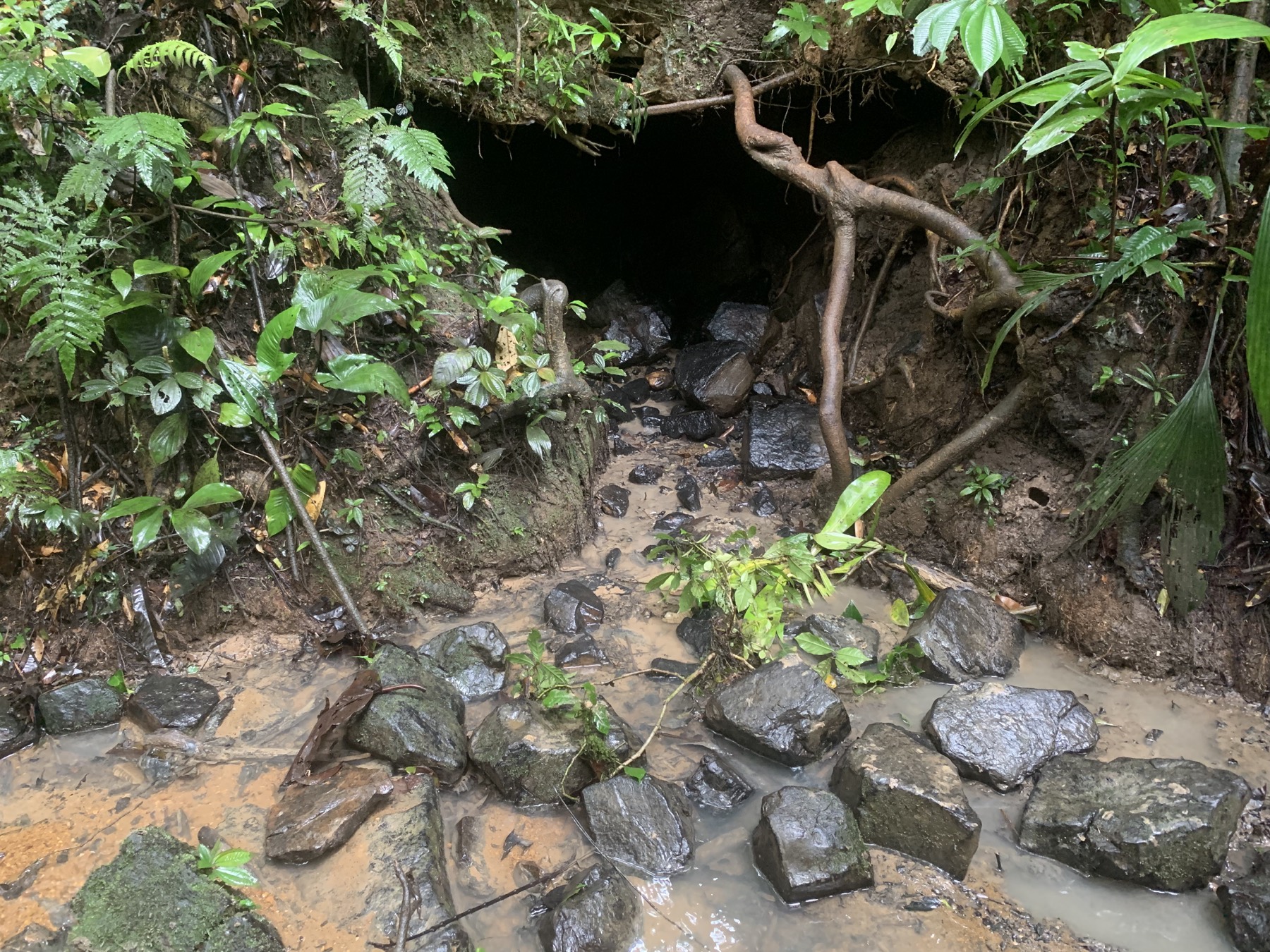
Camera traps and soil analyses from 52 mineral licks show that mammals may get multiple benefits from mineral licks, including mineral supplementation and toxin adsorption.
Forest trails converge on a mineral lick used by several mammal species.
Griffiths, B. M., Hansbrough, G., Griffiths, L. G., Valderrama, D., & Gilmore, M. P.
Scientific Reports · 2024 · DOI 10.1038/s41598-024-80237-0
Key findings
The study tested mineral supplementation, toxin adsorption, and habitat-based explanations across six common mineral-lick visitors.
Frugivores showed greatest support for mineral supplementation, while the folivorous Brazilian porcupine showed greatest support for toxin adsorption.
The varied species responses emphasize why mineral licks are important, localized resources for mammal conservation.
Brief Background
Mineral licks are places where mammals and birds consume soil, potentially gaining minerals missing from their diets or clays that adsorb dietary toxins. Because these sites are remote and difficult to find, many studies have examined few licks or only a subset of soil characteristics. We combined camera-trap records and soil analyses from 52 licks in one Peruvian Amazon watershed to test why six mammal species selected and repeatedly visited particular sites.
Methods
Cameras monitored mineral licks in four rotations from August 2018 through June 2019. Visits by the same species were independent when separated by at least one hour, and frequency was standardized per 100 camera nights.
Researchers collected consumed soil and nearby control soil, then measured physical and chemical properties. Repeated samples were averaged within lick and sample type.
Binomial components estimated whether a site was visited; Poisson components estimated visit frequency. Backward model selection compared scaled soil and habitat covariates.
Results
Agouti, paca, and red howler monkey showed the strongest support for mineral supplementation, including responses consistent with sodium limitation.
Brazilian porcupine use was most consistent with toxin adsorption, including selection for high-clay soils and strong responses to soil pH.
Collared peccary responses were most consistent with habitat selection, while tapir responses supported both mineral supplementation and toxin adsorption.
Publication Data Explorer · Figure 1
These are model-predicted relationships, not raw observations. Each panel varies one soil property across the inner quartile range found at licks visited by a species while holding other covariates at their mean. Select species to compare their responses across all twelve soil properties.
Predicted visit frequency is measured in visits per 100 camera nights. Lines show marginal model relationships across species-specific inner-quartile soil ranges; missing lines indicate that a property was not retained for that species in the published figure.